
Catering Equipment in Malaysia: What You Actually Need for Pop-Ups, Events, and Central Kitchens
Catering can look simple to guests: hot food, on time, served fast. For operators, it’s a mobile production line that changes with your service model. A weekend pop-up, a 400-pax wedding, and a central kitchen feeding multiple delivery points each require different power planning, transport, and workflow.
This guide breaks down catering equipment Malaysia operators actually need—by scenario—so you avoid two costly mistakes: buying heavy back-of-house gear that’s hard to move, and under-buying essentials like hot holding, prep space, and food-safe transport that protect quality and safety.
We’ll focus on practical choices: what to prioritise, what to rent, what to custom-fabricate in stainless steel, and when used equipment makes sense without risking reliability.
Start with your service model (not your menu)
Menus change; constraints usually don’t. Define your operating pattern first. Most Malaysian caterers fit one of three setups:
- Pop-ups & market stalls: tight footprint, uncertain power, fast service window, minimal storage.
- Events & on-site catering: mobile backline, staging/holding, replenishment, sometimes live cooking.
- Central kitchens: batch production, cold chain, packing, storage, distribution at volume.
Pressure-test your setup with four questions that drive the equipment list:
- Power: 13A points only, higher-load supply, or generator support?
- Water & drainage: sink access on site, or must you bring water and manage wastewater?
- Transport: what fits your vehicle, and can two staff move it safely?
- Holding time: how long between cooking and service, and how many replenishment cycles?
Once these are clear, you’ll buy fewer items that look impressive but don’t improve throughput.
The core equipment stack every caterer should plan for
Regardless of size, most caterers need five functional categories. You can scale up or down, but skipping one usually creates bottlenecks.
1) Hot holding and service line
Hot holding is where many new caterers lose money: food dries out, sauces split, proteins overcook, and teams scramble. Build a stable service line:
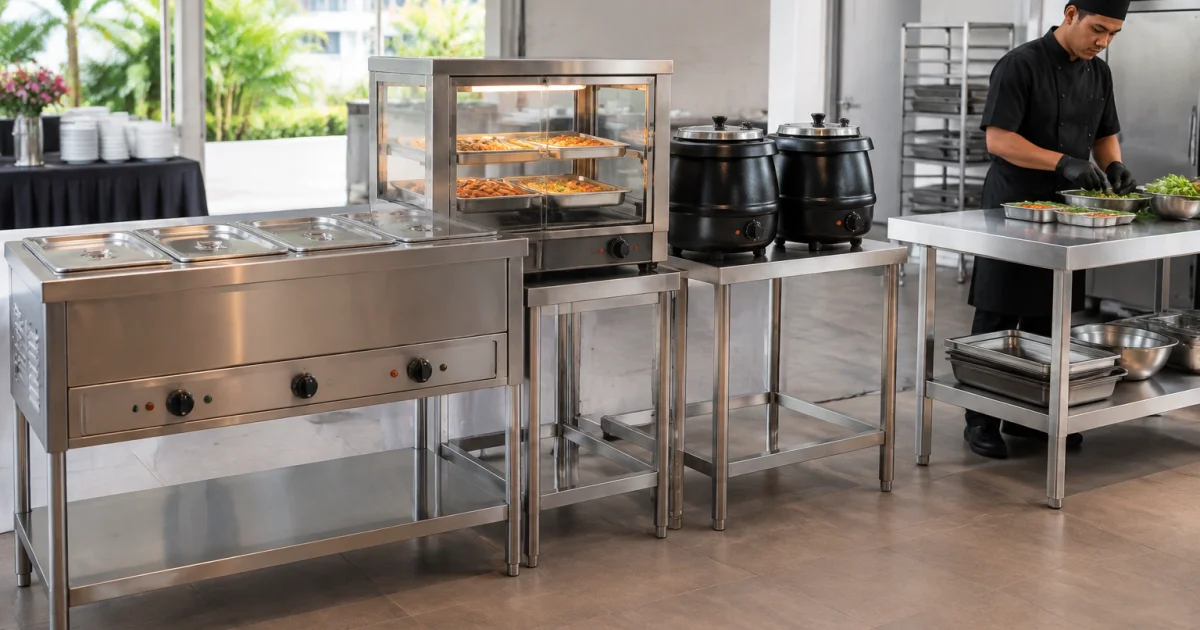
- Bain marie / hot wells: controlled holding for curries, gravies, and replenishment pans.
- Food warmers & hot cabinets: tray holding for plated components or bulk items awaiting service.
- Soup kettles / soup pots: consistent temperature and easy ladling for soups, porridge, sauces.
- Heat lamps (where suitable): short-duration holding for fried items and pass-through staging.
If you run buffets often, a consistent bain marie layout improves speed and portion control. For reference, compare bain marie options by pan configuration and service style.
2) Cold chain (storage + display)
Cold chain failures create waste and last-minute shopping. At minimum, plan for:
- Upright or counter chillers: for prepped ingredients and portioned components.
- Chest freezers: for longer storage cycles and higher-volume frozen items.
- Insulated transport boxes: to move chilled items to site while maintaining temperature.
For pop-ups selling bottled drinks, desserts, or grab-and-go, a beverage display fridge can speed up sales and reduce “open door time” on your main chiller. When comparing a display chiller fridge Malaysia buyers shortlist, prioritise usable shelf depth, condenser access for cleaning, and temperature recovery after frequent openings.
3) Prep surfaces and food-safe stainless infrastructure
Prep space is capacity. More usable stainless surface often outperforms adding another cooking appliance when staff are constantly juggling trays and containers.
- Stainless steel worktables: hygienic prep, portioning, and packing.
- Racks and trolleys: staging GN pans and moving batches efficiently.
- Sinks (where applicable): washing, hand hygiene, and utility tasks in a central kitchen.
For frequent setups, details matter: table height, undershelf clearance for bins, backsplash needs, and caster choice. If you need purpose-built pieces, stainless steel kitchen equipment made to your workflow can reduce setup time and improve safety compared with improvised folding tables.
4) Production cooking equipment (choose modular and repeatable)
Catering production is about repeatability and recovery time: cook in batches, hold, replenish. Select equipment based on whether cooking happens mainly in a central kitchen or live on site.
- Open burners / stock pot ranges: strong for boil-heavy menus and sauces.
- Griddles and grills: fast searing and high-output proteins (when ventilation allows).
- Deep fryers: for volume frying—only if you can manage oil and holding quality.
- Combi/oven solutions (where relevant): batch roasting, baking, controlled reheating.
If you’re expanding your hot line, review commercial cooking equipment categories by output needs and kitchen constraints.
5) Packing, transport, and onsite finishing
Transport is how you protect texture, presentation, and temperature. Build a simple, repeatable system:
- Insulated food carriers: separate hot and cold routes.
- GN pan system: standardise sizes so lids, racks, and holding wells match.
- Labeling and staging: labels reduce onsite searching and rework.
- Small finishing kit: tongs, ladles, squeeze bottles, sanitiser spray, towels, spare gloves—packed as a checklist.
Consistency here makes scaling easier because the team doesn’t reinvent the process each time.
Scenario-based checklists: pop-ups, events, and central kitchens
Use the lists below as minimum viable setups designed to prevent common bottlenecks.
Pop-ups and market booths (tight space, fast transactions)
- Front-of-house: compact display chiller (if selling drinks/desserts), small warmer (if applicable), clear point-of-sale area.
- Backline: one primary cooking appliance (griddle/fryer/burner) matched to your hero item, plus one backup holding option.
- Prep: compact stainless prep table/worktable, ingredient bins, cutting boards, basic knife kit.
- Cold chain: counter chiller or insulated cooler system for replenishment stock.
- Utilities: extension/cable management, basic hand hygiene solution where permitted.
Key advice: Fix workflow before expanding cooking. Better holding or cold storage often increases output more than adding another cooking method.
Events and on-site catering (buffet, plated, or hybrid)
- Holding line: bain marie units, warmers/hot cabinets, soup kettle for liquids.
- Service hardware: GN pans, lids, ladles, serving spoons, sneeze guards where required by venue.
- Staging: stainless prep table, racks/trolleys for replenishment pans.
- Cold support: insulated cold boxes; consider a dedicated beverage display fridge if beverage volume is high.
- Finishing: small burner/induction for sauce touch-ups; heat lamps for short holding.
Key advice: Build redundancy around holding. If one warmer fails, you don’t want food sitting at unsafe temperatures while troubleshooting. Plan the line so staff can replenish from behind without crossing guest flow.
Central kitchens (batch production, storage, distribution)
- Prep & portioning: stainless worktables sized to your container system, a dedicated packing table, racks for staged orders.
- Core storage: upright chillers/freezers sized for peak production days (not average days).
- Cooking & processing: gear matched to your production method (boil/roast/fry/steam), plus mixers/processing machines if you make sauces, marinades, or dough.
- Distribution: insulated transport, trolleys, and a loading workflow that prevents hot/cold crossover.
Key advice: Central kitchens outgrow generic furniture fast. Custom stainless pieces with correct spacing, undershelf storage, and caster specs can remove minutes from every batch—every day.
Buy vs rent vs used: a practical way to control cashflow
Equipment choices are financial choices. Decide based on frequency of use, service-criticality, and cost of failure.
What to buy new (usually)
- Critical cold storage: chillers/freezers that protect inventory and prep schedules.
- High-use cooking items: core appliances your menu relies on weekly.
- Daily-touch stainless infrastructure: tables, sinks, racks—especially when custom-sized to your space.
What to rent (good for peaks and one-off menus)
- Extra warmers / hot cabinets: for seasonal spikes.
- Specialty cooking pieces: used only for limited campaigns or festival menus.
- Temporary cold storage: for short projects or renovations.
What can be smart to buy used
Used equipment can work well if it’s inspected, maintained, and suits your operating reality. Many operators look for used commercial kitchen equipment Malaysia suppliers to stretch budgets during expansion phases.
- Secondary chillers/freezers: for non-critical backup stock (inspect thoroughly).
- Stainless tables and racks: often durable if structurally sound and hygienic.
- Some food processing machines: when condition and parts support can be verified.
If you’re comparing inspected pre-owned options, browse used commercial kitchen equipment and shortlist by condition, suitability, and maintenance practicality—not price alone.
Common mistakes that cause delays (and how to avoid them)
Most stressful events come down to predictable oversights. Here are common issues and the fix.
1) Underestimating holding capacity
Cooking faster doesn’t help if you can’t hold food properly. Size warmers and bain maries to your replenishment rhythm. If replenishment takes 10 minutes, your line should hold more than 10 minutes of demand.
2) Buying equipment that doesn’t fit transport reality
Measure door widths, lift access, vehicle loading height, and whether two people can safely move the unit. A slightly smaller, more mobile unit can outperform a larger one that rarely leaves the kitchen.
3) Ignoring stainless steel layout details
Standard tables can create dead zones and clutter. Use stainless steel kitchen equipment fabrication when you need tables aligned to GN pans, undercounter bins, or a packing line. Aim for fewer steps per batch, not just more surface area.
4) Treating beverage service as an afterthought
Beverages are high-volume and time-sensitive. A dedicated display chiller for bottled drinks can reduce queues and prevent constant opening of your ingredient chiller.
5) Not standardising your pan and container system
Standard GN pans and lids across kitchen, transport, and holding wells prevent last-minute mismatches and simplify training and packing checklists.
Conclusion: build for throughput, not just appliances
The right catering setup isn’t about owning more machines—it’s about a repeatable system: controlled hot holding, reliable cold chain, sufficient stainless prep space, and transport that protects food quality from kitchen to guest.
For your next pop-up, event season, or central kitchen expansion, map your workflow and constraints first. Then choose equipment that supports your pace of service—especially warmers, worktables, racks, and chillers that keep everything moving.
When you’re ready to refine your list, speaking with a one-stop supplier who understands both production kitchens and mobile event realities can help you buy for today while planning for scale.
Frequently Asked Questions
What are the must-have catering equipment items for pop-ups in Malaysia?
For pop-ups, prioritise a compact cooking unit matched to your hero menu item, a reliable hot holding solution (small warmer or bain marie if suitable), a cold solution for ingredients (counter chiller or insulated cold boxes), and a stainless prep table. The goal is fast workflow in a tight footprint—more holding and better prep space often improves output more than adding extra cooking methods.
Is it worth buying a beverage display fridge for events?
If beverages are a high-volume part of your sales, a dedicated beverage display fridge (or display chiller) can reduce queue time and prevent your ingredient chiller from being opened repeatedly. Look for practical shelf space, temperature recovery after frequent door openings, and easy condenser cleaning—especially for dusty event environments.
Can I use used commercial kitchen equipment for catering businesses in Malaysia?
Yes, used equipment can be a cost-effective option when it’s inspected and suitable for your service model. Used stainless tables and racks are often practical, and secondary chillers/freezers can work well for non-critical storage. For core cold chain or mission-critical cooking gear used weekly, many caterers prefer new or thoroughly refurbished units to reduce downtime risk.
When should I choose custom stainless steel kitchen equipment fabrication?
Choose custom fabrication when standard furniture creates workflow problems: packing lines that need specific lengths, undershelf storage for bins, table heights that match your team’s ergonomics, or mobile stations that must fit a vehicle and venue doors. Custom stainless pieces can reduce setup time and improve daily efficiency, especially for central kitchens and frequent event operations.
How do I choose a commercial kitchen equipment supplier in Malaysia for catering needs?
Look for a supplier who understands catering workflows (holding, transport, and staging—not just restaurant cooking), offers a wide range across cold chain, cooking, and foodservice items, and can support delivery/installation and after-sales service. It also helps if they provide flexible options like rental, trade-in, and inspected used equipment so you can scale without overcommitting cashflow.
Need a catering equipment list that fits your service model?
Pearlmile helps Malaysian caterers plan and source the right setup for pop-ups, events, and central kitchens—from bain maries, warmers, grills, and beverage chillers to custom stainless steel worktables and racks. If you’re balancing budget, timing, and space, ask about flexible options like inspected used units, rental, trade-in, delivery, and installation support.