
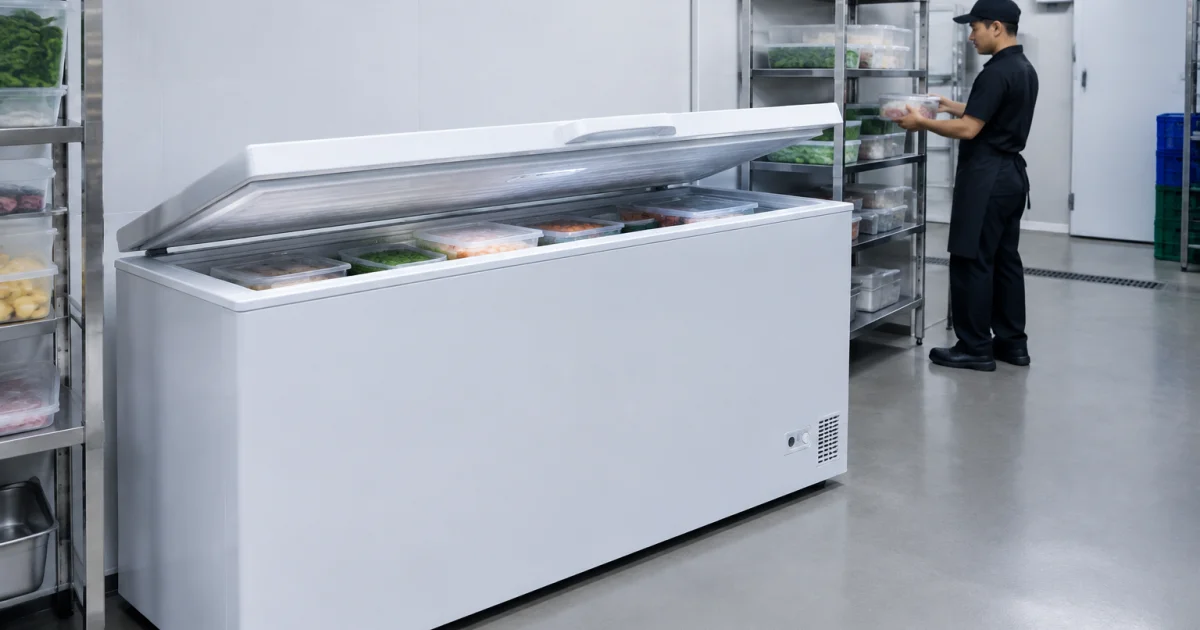
Chest Freezers in Penang: 2026 Demand Trends, Sizing Preferences, and Common Buyer Mistakes
Buying a chest freezer sounds simple until you’re juggling peak prep, unpredictable demand, and a tight back-of-house layout. In Penang, frozen storage is increasingly a workflow decision—not just a cold box purchase. “Bigger is better” is giving way to “right size, right lid style, right placement, right support.”
This guide looks at chest freezers in Penang through a 2026 lens: what’s driving demand, how buyers are sizing units, and the mistakes that lead to wastage, slow service, and avoidable repairs. Use it as a checklist whether you’re choosing new vs used, adding a second location, or upgrading from domestic equipment.
2026 demand trends in Penang: what’s shaping chest freezer purchases
These are the on-the-ground realities affecting how Penang operators buy frozen storage.
1) More menu components are batch-prepped and frozen
More kitchens are freezing pre-portioned proteins, marinated items, pastry components, and base sauces to reduce labour spikes and last-minute prep. For small manufacturers (frozen snacks, dumplings, sauces, ready-to-cook items), consistent frozen storage is part of production control. This increases demand for units that hold volume while staying stable when opened often.
2) Footprint and access matter more than raw litre capacity
Penang kitchens and production spaces are frequently tight. Buyers are prioritising fit, lid clearance, and safe loading/unloading. The “right” freezer is the one staff can use efficiently at peak time—without blocking routes or forcing awkward lifting.
3) Total cost thinking: power, maintenance, and downtime risk
Buyers are looking beyond purchase price to operating cost and failure cost. A freezer that runs warm, ices up quickly, or is difficult to service can cost more in spoilage and emergency replacement than the upfront savings. Expect questions about after-sales support, spare parts, and whether a used unit has been inspected and tested.
4) Buying “systems,” not single items
Freezers are often purchased alongside prep benches, racks, sinks, processing machines, and cooking equipment. Working with a commercial kitchen equipment supplier Malaysia buyers trust can reduce layout and compatibility problems (poor airflow, no staging surface nearby, awkward placement that slows picking).
Sizing preferences: how Penang buyers choose capacity (without regret)
The most common sizing mistake is choosing based on a vague volume estimate (“we need a big one”) instead of daily loading, rotation, and retrieval. Capacity only helps if you can keep the freezer organised and pick stock quickly.
Start with your stock profile, not your headcount
Two outlets with the same number of seats can need very different freezer capacity. What matters is what you freeze and how you pack it:
- High-volume, low-variety (bulk chicken portions, fries, ice): open space helps, but plan baskets/dividers and strong labelling.
- Low-volume, high-variety (many pastry SKUs, seafood cuts, sauces): organisation and access matter; multiple smaller units can outperform one deep chest when picking is frequent.
- Manufacturer-style production: prioritise consistency, rotation lanes, and stackable packaging formats.
Match size to workflow: one big vs two medium units
Many 2026 buyers are choosing a “split risk” setup: two mid-sized freezers instead of one oversized unit. Benefits include:
- Category separation (raw vs cooked, allergens, halal processes, production batches).
- Shorter open-lid time because staff know exactly where items are.
- Continuity if one unit needs servicing or defrosting.
One large unit can still work when the product mix is stable, the storage zone is dedicated, and rotation is controlled.
Don’t forget the “invisible” sizing: clearance and handling
Before confirming dimensions, check practical requirements:
- Lid clearance: can it open fully without hitting shelving, walls, or ducting?
- Working clearance: can staff stand, lift, and set items down safely?
- Delivery route: can it pass doors, corners, lifts, and stair landings?
- Cleaning access: can you reach around it for dust removal and floor cleaning?
If you plan adjacent staging space, a stainless worktop can improve speed and hygiene. Many operators pair freezers with benches and racking for portioning and labelling. If you’re already exploring stainless steel kitchen equipment, consider it part of the same efficiency upgrade.
What to look for when comparing models (new, used, or rental)
Compare options by usage intensity, organisation needs, and how critical frozen inventory is to revenue.
Temperature stability and insulation performance
Temperature stability matters more than a fancy control panel. Chest designs are forgiving during brief openings, but only if seals and hinges are sound. Check gasket condition, lid alignment, and any warping that could cause air leaks.
Defrost approach and daily housekeeping
Ice build-up steals usable space and makes rotation difficult. Choose a model you can maintain, and set a defrost routine that matches your opening frequency and product type. A second freezer can make scheduled defrosting possible without stopping production.
Basket/divider options for commercial organising
Organisation accessories affect real productivity. Consider basket availability, replacement parts, and whether your packaging format (pouches, tubs, cartons) suits vertical dividers or zoning by category.
Used vs new: when “value” is real (and when it isn’t)
Used units can make sense for startups, seasonal operations, or expansion—if the freezer is inspected, tested, and appropriate for commercial duty cycles. Be cautious when condition and service history are unclear.
If you’re comparing pre-owned options as part of a broader setup, a curated range of used commercial kitchen equipment can help you align purchases (freezer + racks + prep tables) as one system.
Rental for temporary peaks, pop-ups, and renovation phases
Rental can suit festive peaks, catering contracts, pop-ups, and renovation transitions. It reduces upfront outlay and can support trade-in planning when you upgrade permanently.
Common buyer mistakes (and how to avoid them)
These issues come up when buyers rush, treat freezers as interchangeable, or ignore layout realities. Avoiding them usually saves more than negotiating a small discount.
Mistake 1: Buying for maximum capacity instead of maximum usable access
An oversized chest can become a “cold storage pit” when stock stacks too deep. Bottom layers get forgotten, FIFO fails, and wastage increases. Fix this by choosing a size aligned to retrieval frequency and committing to simple zoning and labelling from day one.
Mistake 2: Underestimating lid-opening and staff ergonomics
Frequent picking from a deep chest slows service and increases injury risk. If picking is constant, two smaller units with category separation can reduce bending and searching time.
Mistake 3: Placing the freezer in a “hot corner” with poor airflow
Heat from cooking equipment, restricted ventilation, and dust build-up can make a freezer work harder and fail sooner. Place it away from heat sources, maintain airflow, and keep access for cleaning. When reorganising, think in zones: storage, prep, cook, pass.
If you’re upgrading cooking stations too, ensure freezer placement doesn’t conflict with new footprints. Reviewing typical sizes in commercial cooking equipment can help you plan back-of-house flow.
Mistake 4: Skipping the “support plan” (delivery, installation, and service)
Even a good unit can fail early if transported poorly, installed unevenly, or neglected. Confirm who handles delivery and positioning, and what after-sales service looks like. If frozen inventory is critical, support is part of the purchase.
Mistake 5: Treating frozen storage as separate from prep and processing
For manufacturers and high-volume kitchens, freezer choice is tied to how you portion, pack, and process. Align freezer capacity with upstream output to avoid bottlenecks. If expansion includes production tools, review needs across food processing machinery so storage matches processing.
Practical sizing and buying checklist for Penang operators
Use this checklist to keep the decision grounded in operations, not specs alone:
- Stock map: list top 10 frozen SKUs by volume and pick frequency.
- Packaging standard: choose stackable container sizes and consistent labels.
- Zoning: define categories (raw/cooked, allergen, batch date, supplier lot).
- Layout: measure doorways, corners, and lid clearance at the final spot.
- Access: confirm who picks items and how often; plan baskets/dividers.
- Redundancy: decide if two units are needed for continuity/defrost cycles.
- New vs used: if used, insist on inspection/testing and realistic expectations.
- Support: confirm delivery handling, installation advice, and service pathway.
If you’re searching specifically for a chest freezer Penang operators can rely on, shortlist by workflow first (access, organisation, placement), then narrow by capacity and condition. That’s how you avoid regret purchases.
Conclusion: buy for workflow, not just litres
The best chest freezer purchases in Penang reduce daily friction: faster picking, clearer rotation, safer handling, and fewer last-minute storage problems. Whether you choose new, used, or rental, prioritise usable access, placement, and support—not just internal volume.
If frozen storage is part of a wider upgrade (prep tables, racks, processing equipment, or cooking line), align everything to one workflow plan for immediate gains in speed, consistency, and reduced wastage.
Frequently Asked Questions
Is it worth buying a used chest freezer for a Penang restaurant or small factory?
It can be worth it if the unit is inspected, tested, and sized for your actual workflow. Used units are most suitable when you can verify gasket condition, temperature holding performance, and overall wear, and when after-sales support or service access is clear. If your frozen inventory is business-critical, consider redundancy (two units) so a single breakdown doesn’t stop operations.
What size chest freezer should I choose for high-SKU storage (many items, small quantities)?
High-SKU storage often works better with organisation and access rather than one very deep freezer. Many operators do well with two medium units so you can separate categories and reduce search time. Prioritise baskets/dividers, consistent container sizes, and a zoning system (by SKU type, allergens, or batch date) to prevent items getting buried.
How do I avoid ice build-up and messy stock rotation in a chest freezer?
Reduce open-lid time by assigning zones, using baskets, and keeping labels consistent. Schedule routine defrosting before ice becomes thick enough to steal space, and keep the lid seal clean and intact. Good housekeeping (wipe spills, remove damaged packaging, and keep a simple FIFO routine) usually prevents the “frozen pile” problem.
Can stainless steel kitchen equipment fabrication help with freezer workflow?
Yes. Custom stainless steel worktables, racks, and staging counters can be built to fit your freezer location, container sizes, and staff movement routes. This improves portioning, labelling, and packing speed, and helps keep frozen storage organised. The key is designing the surrounding prep and staging area together with the freezer placement.
Should I buy a chest freezer together with other commercial kitchen equipment?
If you’re renovating, expanding, or opening a new outlet, buying as a set often reduces layout conflicts and improves workflow. For example, pairing freezers with prep tables and racks supports better staging and rotation, while aligning freezer placement with cooking equipment reduces heat exposure and congestion. A one-stop supplier can also simplify delivery, installation coordination, and after-sales support.
Plan your chest freezer setup with Pearlmile
If you’re comparing new vs used units, deciding between one large freezer or two medium freezers, or fitting frozen storage into a tight Penang back-of-house, Pearlmile can help you shortlist options based on workflow, layout clearance, and budget. As a one-stop commercial kitchen equipment supplier with in-house stainless steel fabrication, we can support the freezer purchase plus the surrounding prep tables, racks, and installation needs—so your storage actually works on busy service days.