
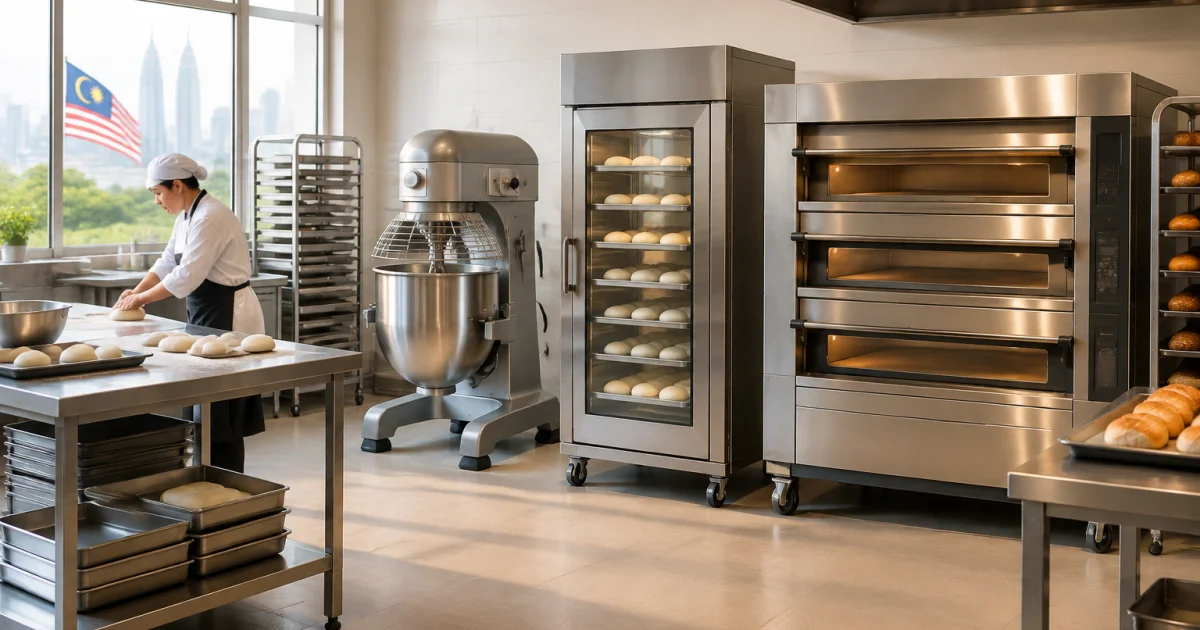
What’s New From Bakery Equipment Suppliers in Malaysia: Lead Times, Installation Expectations, and After-Sales Support
For bakery and dessert operators, the biggest procurement risk is rarely the machine itself—it’s the timeline and handover. A late delivery, unexpected site requirements, or weak commissioning can delay opening, disrupt trials, and increase costs.
That’s why choosing a bakery equipment supplier in Malaysia has moved beyond catalog and pricing. Buyers now evaluate lead time transparency, installation guidance, site readiness coordination, spare parts clarity, and responsiveness after you start baking.
Below is an operations-first view of what many buyers prioritize today: phased timelines, clearer installation scope, and support that reduces downtime.
Lead times are now a planning tool, not just a promise
Instead of relying on a single “X weeks” estimate, treat lead time as phases—especially when multiple machines must align with renovation progress.
Ask suppliers to break timelines into:
- Order confirmation to availability (local stock vs incoming shipment)
- Delivery scheduling (truck/crew slotting and site access constraints)
- Installation and commissioning window (testing plus operator briefing)
Better suppliers also highlight dependencies. If electrical upgrades, gas testing, or ventilation readiness aren’t completed, a delivery date may be achievable while commissioning is not.
Common factors that stretch delivery and handover
The usual timeline drivers are predictable:
- Non-standard specs: special voltage, custom tray sizes, or access/clearance limitations.
- Site readiness gaps: unfinished floors, missing drainage, or insufficient ventilation clearance.
- Multi-vendor coordination: oven work depends on hood/ducting; refrigeration depends on counters and placement.
- Testing dependencies: gas pressure checks, electrical load checks, temperature stability tests before acceptance.
A supplier who maps these early can be more valuable than one who quotes an aggressive timeline with unstated conditions.
Installation expectations: what buyers should clarify before paying a deposit
Installation is where costly misunderstandings happen. “Installation included” can mean anything from basic placement and connection to full commissioning, calibration, and training.
Protect your schedule by documenting scope clearly: what’s included, what’s excluded, and what must be ready on your side before the team arrives.
A practical installation checklist (buyer-friendly)
Use this checklist when comparing suppliers or approving a quotation:
- Site survey: Will they confirm access routes, door sizes, turning radius, and final placement before delivery?
- Delivery method: Who manages lifting to upper floors, tight corridors, or malls with restricted access hours?
- Power and gas responsibility: Do they connect only to prepared points, and can they advise on required load/fittings?
- Ventilation compatibility: For ovens/cooking equipment, what must be ready for hood and ducting?
- Commissioning: Will they verify key functions (temperature stability, timers, safety cut-offs) and provide a handover record?
- Operator briefing: Will your team be shown warm-up routines, cleaning, and basic troubleshooting?
Even experienced operators benefit from a structured run-through: deck ovens require disciplined preheat routines; proofers need correct humidity settings by product; mixers need batch limits reinforced to avoid early wear.
Layout and workflow are becoming part of “installation expectations”
Buyers increasingly expect suppliers to consider workflow—not just machine specs. A practical plan covers:
- Receiving to storage (dry/cold storage flow and allergen separation where relevant)
- Mixing to shaping (bench space, rack movement, dough rest timing)
- Proofing to baking (short travel distance, minimal heat exposure)
- Cooling and finishing (racks, blast chilling where applicable, packaging zones)
If you’re adding sinks, counters, racks, or worktables, results are typically better when stainless fabrication and equipment placement are planned together rather than purchased in isolation.
After-sales support: what “support” should actually look like in a bakery
After-sales support isn’t just warranty language—it’s how quickly you get back to production (and how well you prevent avoidable downtime through correct use and maintenance).
Evaluate support in three layers:
- Responsiveness: how issues are logged, triaged, and scheduled.
- Technical capability: whether technicians understand bakery usage patterns and common failure points.
- Parts and wear items: clarity on consumables vs defects and how replacements are sourced.
Questions to ask about service coverage (without getting too technical)
Keep questions tied to your production reality:
- What happens if an oven can’t reach set temperature or trips mid-bake?
- What preventive maintenance intervals do you recommend for mixers (lubrication, belts, checks)?
- Do you provide guidance that reduces failures (batch limits, correct cleaning routines)?
- If a proofer can’t hold humidity, do you troubleshoot seals, sensors, and water feed issues on-site?
Request practical handover documentation: manuals, basic troubleshooting steps, and a weekly maintenance checklist. This helps your supervisor catch issues early and reduces unnecessary callouts.
New vs used equipment: timelines, commissioning, and risk management
Many operators consider used equipment to stretch capital—often for supporting items like racks and worktables, or machines where condition can be verified.
For timelines and installation, used equipment requires extra discipline:
- Inspection and testing: ensure function checks are demonstrated before delivery.
- Refurbishment time: servicing or part replacement adds steps to the schedule.
- Compatibility checks: confirm voltage, plug type, and footprint (older models vary).
- Parts availability: older units may have slower sourcing, increasing downtime risk.
A common approach is new equipment for production-critical items (where downtime is most costly) and inspected used units for secondary categories—provided support boundaries are clear.
If you’re exploring used options, a curated list like Used Commercial Kitchen Equipment can help you understand typical categories and how a supplier describes inspection and handover.
Don’t forget front-of-house cold display planning
Many dessert businesses also need display refrigeration. For cakes, pastries, and bottled beverages, a display chiller can be a timeline-critical item—especially in mall fit-outs with limited delivery windows.
Include refrigeration in the same delivery plan so opening isn’t delayed by one missing unit. Confirm temperature requirements, door swing clearance, and cleaning access before final placement.
How to compare suppliers: a buyer’s scorecard for timelines and support
When equipment specs look similar, the differentiator is often project discipline. Compare suppliers using a scorecard that reflects real risks: delay, weak commissioning, and slow support.
| Area | What to request | Why it matters |
|---|---|---|
| Lead time clarity | Phased timeline (availability, delivery, commissioning) | Reduces “arrived but not usable” scenarios |
| Site readiness | Pre-install checklist (power, gas, ventilation, access) | Prevents failed installation visits and rescheduling |
| Installation scope | Written inclusions/exclusions and handover steps | Avoids last-minute add-on work and disputes |
| Training and commissioning | Operator briefing + acceptance testing approach | Improves consistency and reduces early breakdowns |
| After-sales process | Service request workflow and maintenance guidance | Shortens downtime and supports preventive habits |
If you want to compare by category, review assortments such as Bakery Machinery, then confirm what delivery, installation, and support package typically applies to each machine class.
Where stainless steel fabrication fits into the “new expectations”
Bakery projects rarely succeed with machines alone. Stainless tables, sinks, racks, and counters often determine whether workflow stays clean and efficient. Increasingly, buyers prefer one supplier to coordinate equipment and stainless work so measurements, heights, and clearances align.
Treat fabrication lead time like equipment lead time: confirm when final measurements happen, how long fabrication takes, and delivery/installation sequencing so counters don’t block machine placement.
For reference on what can be custom-built, see Stainless Steel Kitchen Equipment and use it to prompt questions on thickness, finishing, load capacity, and cleaning-friendly joints—details that matter in a flour-heavy environment.
Conclusion: plan the handover, not just the purchase
What’s “new” from bakery equipment suppliers in Malaysia is less about flashy features and more about execution: clearer lead time phases, better-defined installation scope, and after-sales support that fits daily production. These factors can determine whether you open smoothly or lose weeks to costly disruption.
As you compare options, prioritize suppliers who help manage dependencies (site readiness, access, ventilation, electrical load), document commissioning and acceptance steps, and support you after launch. With early planning, procurement becomes predictable—and your team can focus on product quality instead of chasing timelines.
Frequently Asked Questions
How do I estimate a realistic timeline when buying bakery machinery?
Ask the supplier to split timelines into (1) availability or stock status, (2) delivery scheduling, and (3) installation and commissioning. Then match those phases to your renovation milestones—power, gas, ventilation, floor finishing, and delivery access approvals—so “delivery date” doesn’t get mistaken for “ready to bake” date.
What should be included in commercial bakery equipment installation?
At minimum, clarify positioning, connection to prepared power/gas points (if applicable), basic function checks, and commissioning steps such as temperature stability checks for ovens and humidity checks for proofers. Many buyers also request a short operator briefing covering warm-up routines, cleaning steps, and basic troubleshooting to reduce early downtime.
Is used commercial kitchen equipment in Malaysia a good option for bakeries?
It can be, especially for non-critical or supporting items, if the equipment is inspected, tested, and matched to your site requirements (voltage, plug type, footprint). For production-critical items, weigh the risk of longer parts sourcing and potential downtime. A supplier should be transparent about condition, what has been serviced, and what support is available after delivery.
Can I buy second hand stainless steel kitchen equipment, or should I fabricate new?
Second hand stainless steel kitchen equipment may work for standard items if dimensions and condition suit your workflow. Fabricating new is often better when you need exact heights, sink positions, rack spacing, or counters designed around your machines. Either way, confirm cleaning access, load capacity, and whether the layout leaves enough clearance for installation and future maintenance.
What after-sales support should I expect from a commercial kitchen equipment supplier in Malaysia?
Expect a clear service request process, practical troubleshooting guidance, and advice on preventive maintenance (especially for mixers, ovens, and refrigeration). Also ask how parts and wear items are handled and what information you should keep on file (model/serial, service history). Strong after-sales support focuses on getting you back into production quickly and preventing repeat issues.
Plan your bakery setup with Pearlmile—timelines, installation, and support included
If you’re comparing suppliers and want fewer surprises during delivery and handover, Pearlmile can help you align equipment selection with your opening timeline. From bakery machinery (mixers, proofers, ovens) to stainless steel fabrication, refrigeration, and kitchen support, our team focuses on practical site readiness, commissioning expectations, and after-sales assistance for Malaysian F&B operators.
Share your menu and target opening date, and we’ll help you map the equipment list, lead time dependencies, and installation sequence so your production trials start on schedule.